
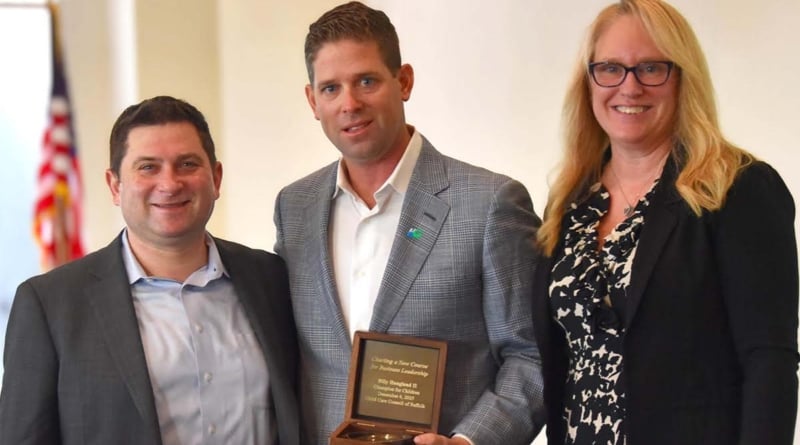
Child Care Council honors local business leader at ‘Breakfast of Champions’
The Child Care Council of Suffolk recently hosted its annual Breakfast of Champions, honoring Billy Haugland Jr. for his leadership in expanding child care support for working families. Haugland, the CEO of Haugland Group, an energy and heavy civil construction firm based in Melville, was also honored for becoming a prominent regional advocate encouraging employers to take a more active role in addressing Long Island’s child care crisis.
As families face increasing economic pressure and child care costs that can exceed $24,000 a year, Haugland underscored the urgent need for employers to rethink their role in supporting their workforce.
“Child care is not a perk or a luxury, it is infrastructure,” said Haugland. “When families are forced to choose between opportunity and affordability, our workforce and our economy lose. Employers have a responsibility, and an opportunity, to help close that gap.”
Beginning Jan. 1, 2026, the federal Dependent Care FSA limit will increase from $5,000 to $7,500. However, many employers and employees are unaware of the new limit or have not yet adjusted their benefits for the 2026 enrollment period. The council emphasized that employer education and timely HR updates will determine whether families actually receive this long-awaited financial relief.
“The increase in the Dependent Care FSA limit is a rare opportunity for families to see meaningful financial relief, but that relief only happens if employers take action,” said Jennifer Rojas, executive director of the Child Care Council of Suffolk. “We want to ensure all employers are aware of this increase and can promote it as well as the other tools available to their employees.”
Haugland Group’s decision to adopt the enhanced Dependent Care FSA benefit earlier this year was supported by the Child Care Council’s employer toolkit, which helps businesses to implement child care policies.